Back
Back
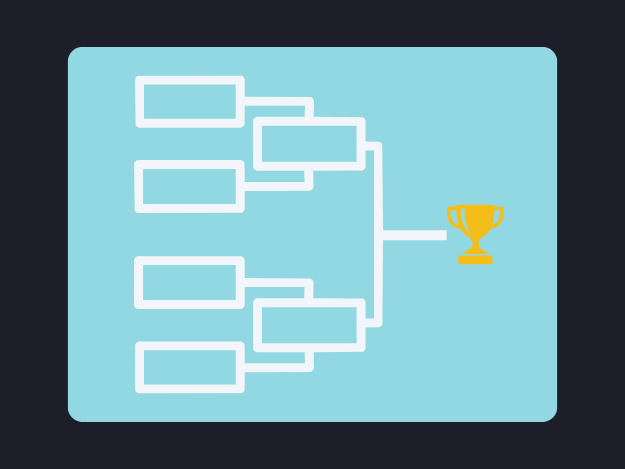
March Madness isn’t just for college basketball. The bracket format is one of the most exciting ways to bring energy, visibility, and friendly rivalry into your sales organization.
Elimination-style competitions tap into something every sales team already loves: head-to-head competition, clear stakes, and the thrill of advancing to the next round. When designed strategically, they can drive real behavior change - not just short-term excitement.
Here’s how to plan a March Madness–style sales competition that is both fun and impactful.
Looking for more sales contest templates? See Ambition's complete library and download your favorites here.
Watch an overview of Brackets in this short video.
Start With the Right Competition Length
One of the biggest advantages of bracket competitions is their flexibility. Depending on your goals, rounds can move quickly or stretch over longer periods.
- Short rounds (1–8 hours): Great for generating bursts of activity. These are ideal when you want to drive high energy around behaviors like call volume or meetings booked.
- Medium rounds (1–3 days): A good balance between speed and fairness. These allow reps enough time to adjust their behavior and compete without the results feeling random.
- Long rounds (1–2 weeks): Best when competing on metrics that take longer to influence - like pipeline creation or revenue.
The key is aligning the round length with the behavior you want to influence. If the metric requires time to change, the competition should reflect that.
Plan Your Bracket Based on Participation
Bracket competitions work best when the structure feels fair and intentional. That means thinking about how many competitors you want in the bracket.
Due to the nature of a bracket style competition, each round must contain a specific number of competitors in order for the brackets to advance as expected. Ambition bracket competitions support having either 2, 4, 8, 16, 32, 64, 128, or 256 competitors.
But what if your number of competitors does not perfectly fit in the brackets?
In that case, Ambition will turn Round 1 into the play-in round. Lower-seeded competitors face off first to earn their place in the official bracket while higher seeded competitors will automatically advance to Round 2. This keeps the bracket structure clean.
Pro tip: Make Round 1 quick (3 hours tops!) in order to get the “play-in round” out of the way, so that the full bracket can begin!
Choose Metrics That Show Impact Quickly
The most successful competitions focus on behaviors that participants can influence immediately.
Top-of-funnel metrics tend to work especially well because they show movement quickly. Examples include:
- Calls made
- Conversations
- Meetings booked
- Opportunities created
However, you don’t have to sacrifice quality to get speed. Consider metrics that balance both.
For example:
Instead of “Calls Made,” try
→ “Calls Over 60 Seconds”
Instead of “Opportunities Created,” try
→ “Opportunities Created with over $10,000 Revenue”
These types of metrics encourage the right behavior, not just activity for activity’s sake.
Use Seeding to Add Competitive Energy
Ambition will automatically seed competitors based on recent performance which adds another strategic layer to your competition.
For example:
- Top performers get higher seeds
- New hires or lower performers start lower in the bracket
This creates a dynamic similar to the NCAA tournament: everyone has a chance to upset the favorite.
It also adds storytelling to the competition. Teams quickly start asking:
- “Can the #12 seed upset the #3?”
- “Will the top performer make it to the finals?”
That narrative keeps engagement high throughout the tournament.
Align the Competition With a Business Moment
March Madness competitions are most effective when tied to a specific moment in the business.
Great examples include:
- The start of a new quarter
- A pipeline generation push
- A product launch
- A seasonal sales period
The bracket format naturally builds momentum. Each round narrows the field, keeping participants focused on the next win.
Make the Finals Feel Big
Don’t let the championship round feel like just another day of selling.
When you reach the final matchup, amplify the excitement:
- Announce the finalists publicly
- Share bracket updates across the team
- Highlight previous round wins
- Create a visible leaderboard
A little storytelling goes a long way. The more the team follows the bracket, the more invested they become.
The Real Goal: Driving the Right Behaviors
At the end of the day, the best competitions don’t just entertain your reps — they shape their habits.
When your bracket structure, metrics, and timeline align with the behaviors you want to drive, the result is a competition that delivers both:
🏆 Energy for the team
📈 Impact for the business
And just like March Madness, sometimes the most memorable moment is the unexpected upset. See an overview of Brackets in this short video.
Looking for more sales contest templates? See Ambition's complete library and download your favorites here.