.svg)
.svg)
.svg)
Back to all posts
🔑🔑🔑 Keys to Running a Great Pipeline Check-in
Prioritize signals, drive accountability, and deliver better results by running a structured pipeline review
November 25, 2024

Mary Foster
Structure & Format
- Frequency: Conduct pipeline reviews weekly or bi-weekly based on sales cycle and deal volume, with more frequent reviews for fast-paced deals.
- Attendees: Involve sales reps, managers, and key stakeholders ( marketing, solutions engineers or product specialists) for cross-functional collaboration.
- Agenda:
- Quick Overview: Summarize pipeline health (total value, deal count, market segments, stage progression, etc).
- Stage Review: Review deals by stages to identify any stalled progress.
- Priority Deals: Focus on high-value or high-risk deals needing attention.
- Action Items: Assign action items with clear ownership and deadlines.
Key Metrics to Track
- Pipeline Health:
- Total Pipeline: All active / open deals to assess pipeline coverage, 3,000 ft view.
- Coverage Ratio: Advancing pipeline-to-target ratio (best practice suggests for 3:1) to ensure ample opportunities for all reps. Why advancing? Hone in on deals beyond first stage.
- New Pipeline: pace of adding new deals, indicating lead gen/outbound success.

- Stage Progression:
- Average Time in Stage: Typical time deals spend in each stage; flag outliers.
- Deal Velocity: Speed of deal progression; faster deals often win more.
- Stage Conversion Rate: Percentage moving from one stage to the next, revealing bottlenecks.
- Deal Risk Indicators:
- Stalled Deals: Deals with no recent progress or engagement.
- Engagement Score: Buyer interest level based on recent interactions.
- Stakeholder Engagement: Ensures involvement of key decision-makers.

- Sales Activity: ensure reps are getting individualized scorecard or coaching that shows activity and effectiveness rates at the individual and team level
- Activity Volume: Count of calls, emails, and meetings to ensure engagement.
- Activity Effectiveness: Response rates and follow-ups per activity.
- Last Activity Date: Tracks recent engagement to keep deals active.

👩🏫 Review Process & Best Practices
- Share the Signals First: What does your seller's pipeline tell you about their likelihood to hit goal? Be honest.
- Prioritize High-Impact Deals: Focus on high-value and high-risk deals, collaboratively tackling challenges.
- Address Bottlenecks: Are there consistent points where deals die? Use metrics to spot skill or process issues.
- Data-Driven Discussions: Keep reviews factual, focusing on actionable insights.
- Assign Action Items: Set clear next steps for each deal with designated owners.
- Follow Up: Start each review by tracking progress on previous action items for accountability.

👨💻 Tools & Resources
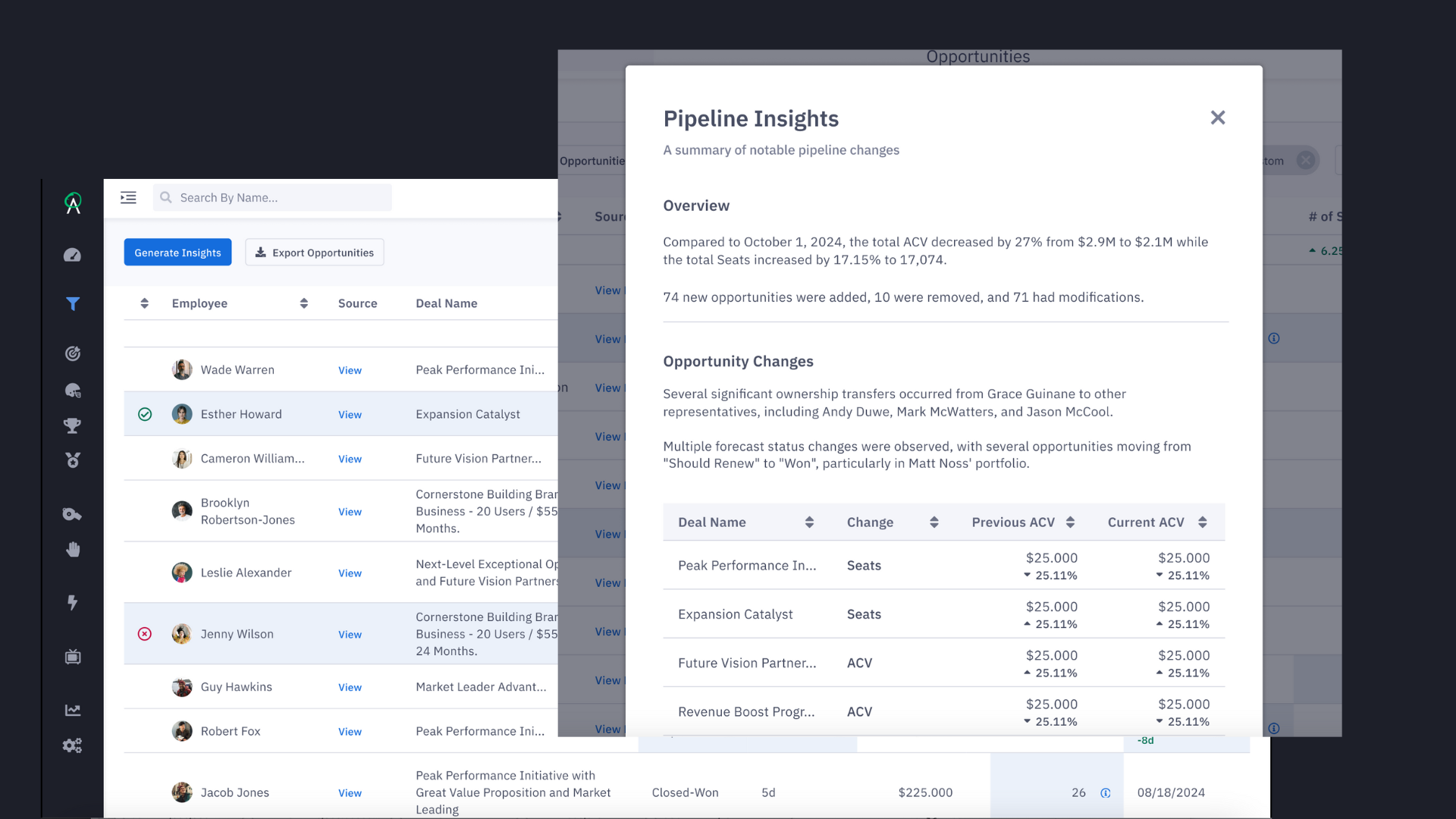
- AI Pipeline Dashboards: Visualize pipeline health, deal stages, and risks in real time. (Ambition's Pipeline Intelligence is launching 12-12-2024!)
- AI Coaching Tools: Track engagement metrics
- Automated Alerts: Use data alerts to flag stalled or progressed deals, get summaries of low engagement, and approaching deadlines.

🚩 Red Flags to Watch For
- Stalled Deals: Deals sitting too long or stuck in one stage.
- Missing Stakeholder Engagement: Lack of decision-maker involvement or buyer interest.
- Low Activity on High-Value Deals: Insufficient sales or buyer activity on high-value deals may indicate neglect or waning interest.
- See more here
🤝 Outcomes of the Perfect Pipeline Review
- Clear Next Steps: Concrete actions for each priority deal with assigned ownership.
- Informed Forecasts: More accurate revenue forecasts based on data-driven insights.
- Risk Mitigation: Early issue identification to prevent lost or delayed deals.
- Team Accountability: Clear responsibilities for each rep, with progress reviewed next time.
See the system in action
RESOURCES FOR REVENUE TEAMS
Insights for high-achieving sales teams
.png)
Outbound Is Harder Than Ever. Here’s What’s Working Now: A Conversation with Jorge Soto
Brian asked Jorge Soto, a B2B sales and go-to-market veteran and host of The GTM Pack, what has changed most for him in the last twelve months, on the Sales Operator Series. Here's a 5-minute recap of their conversation.
.png)


Stop chasing targets, start predicting revenue
Transform your revenue org into a high-performing growth engine with structured insights, top-down visibility, and built-in consistency.
%20(1).png)
.svg)
.svg)